
SAIF (Switching Activity Interchange Format)
- What is SAIF?
SAIF = Switching Activity Interchange Format. SAIF is a file format used to describe signal switching activity so that synthesis, physical implementation, and power-analysis tools can estimate dynamic power using realistic activity information. Typical information represented: how long a signal is 0, how long it is 1, and how frequently it toggles. The exact fields and annotation behaviour depend on the tool and flow.
Important: SAIF is an activity file, not a power report.
- Why do we need SAIF?
Dynamic power is commonly approximated as:
Pdyn = alpha * C * V2 * f
where alpha is switching activity, C is capacitance, V is supply voltage, and f is frequency. SAIF mainly supplies activity information related to alpha.
Example: if two nets have the same capacitance but one toggles much more often, that net can consume much more dynamic power. SAIF helps the tool see this difference instead of relying only on assumed/vectorless activity.
- Overall SAIF flow
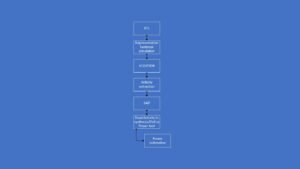
- What are VCD and FSDB?
VCD – Value Change Dump: a standard waveform dump format that records signal value changes over simulation time.
FSDB – Fast Signal Database: a waveform database format commonly used in Synopsys Verdi/Novas debug flows. It serves a similar purpose to VCD but is optimized for large waveform databases and debug usage.
| File | Main purpose |
| VCD | Detailed signal value-change history |
| FSDB | Detailed waveform database, commonly used with Verdi/Novas |
| SAIF | Summarized switching-activity information for power analysis |
- Why convert VCD/FSDB to SAIF?
VCD/FSDB contain detailed waveform history. Power tools usually need a compact representation of the observed activity. Activity extraction summarizes the simulation behavior into activity information that can be annotated back onto the design.
Conceptually:
| VCD / FSDB -> activity extraction -> SAIF |
- How does the synthesis / implementation tool use SAIF?
The tool reads the SAIF and maps activity information to corresponding RTL/netlist signals, pins, and nets. It then combines activity with library power models and design information such as capacitance, voltage, frequency, and timing.
Conceptually:
| SAIF activity + library power model + capacitance + voltage + frequency -> power estimation |
- SAIF does not “optimize power” by itself
SAIF = input information. The optimizer uses that information to make implementation choices that reduce power when the timing/area/functionality trade-off allows it.
- Common power-aware optimization techniques
- Cell downsizing: On a timing-safe path, a tool may replace a large drive cell with a smaller drive cell. Smaller cells generally reduce capacitance and internal power. SAIF – VLSI Study Notes Page 3 Example: BUF_X8 -> BUF_X4 -> BUF_X2, where timing still meets the constraint.
- Cell upsizing: On a timing-critical path, the tool may upsize a cell to improve slew and delay. This can increase power, so it is a trade-off.
- Multi-Vt optimization: LVT cells are faster but usually have higher leakage; HVT cells are slower but usually have lower leakage. This is mainly a leakage-power optimization, coordinated with timing and area.
- Logic restructuring: The tool may rewrite Boolean logic, remove redundant logic, or choose a lower-switching implementation while preserving functionality.
- Buffer / fanout optimization: High-fanout nets may be buffered or restructured. This can improve timing and transition, but extra buffers also add capacitance and internal power. The optimizer balances the trade-off.
- Clock gating: Clock gating prevents clock toggling in an idle block. Because the clock drives many sequential elements, reducing clock activity can produce a large power benefit.
- Activity / switching reduction: If a high-activity cone can be implemented with less capacitance or unnecessary transitions, the tool may prefer that implementation.
- How SAIF helps prioritize optimization
Consider two nets with the same capacitance:
| Net | Activity alpha | Capacitance C | Relative dynamic-power factor alpha*C |
| A | 0.80 | 100fF | 80 |
| B | 0.02 | 100fF | 2 |
Net A has a much larger alpha*C product, so reducing capacitance or switching on Net A is generally a much larger dynamic-power opportunity than doing the same on Net B, all else being equal.
- SAIF and physical capacitance
SAIF provides activity; it does not provide final routed capacitance. During synthesis, the tool uses estimated capacitance. During physical implementation, the tool can use placement/routing-based or extracted parasitics for a more physical power estimate. Therefore:
| Synthesis: activity + estimated C -> power estimate Physical implementation: activity + physical/extracted RC -> more physical power estimate. |
- SAIF-based vs vectorless power
Vectorless: the tool assumes switching activity using default or modeled assumptions. Useful early, but workload may be less representative.
SAIF-based: switching activity comes from representative simulation, so the estimate is more workload-aware.
- Key formula and concepts
| Concept | Note |
| Dynamic power | Pdyn = alpha * C * V2 * f |
| Main SAIF contribution | Switching activity / alpha |
| VCD / FSDB | Detailed simulation waveform history |
| SAIF | Summarized switching-activity representation |
| Power optimization | Reduce alpha and/or C while meeting timing, area, and functionality |
| Clock gating | Reduce clock and downstream switching when a block is idle |
| Cell sizing | Use smaller cells when timing allows; larger cells when timing requires |
- Final Word
Simulation tells you what switches. VCD/FSDB record the detailed switching history. SAIF summarizes that switching behaviour. The synthesis/implementation tool combines the activity with electrical and library information to estimate power and then chooses optimizations that reduce power without breaking timing, area, or functional requirements.
| VCD/FSDB = waveform history; SAIF = activity summary; Power Tool = activity + RC/load + library models -> Power stimate -> Optimization. |